
Start where the night is pulling.
Cravings, work pressure, family stress, loneliness, social pressure, and starting over do not need the same first sentence.
Shared Corners is not another sobriety tracker. It is a private place for raw, real-time peer conversation: use a handle, keep your real name out of it, and talk with others trying to get through the same moment without drinking.
Inside the commons
You do not have to explain your whole story at the door. Generate a handle, pick the corner that fits tonight, and talk with peers who can share what has helped them through a familiar moment.
Section129 I have to go to this football game and everybody there drinks.
PorchLight_77 In-laws are coming for a long weekend. What do I do?
DeadlineMilo If my boss gives me one more deadline this week, I am going to lose it.
The first five minutes
Choose the pressure point. Pick the corner that feels closest, even if the night is messy.
Use a handle. Keep your real name out of it and share only what helps.
Say the next few minutes. Tell the room what is pulling at you right now.
Trade what works. Borrow someone else's experience, or leave something useful for the next person.
The decision moment
The point is not to count days or perform recovery. It is the after-work hour, the event, the lonely kitchen, the walk past the real bar, or the first honest reset. Shared Corners gives that moment people to talk to.
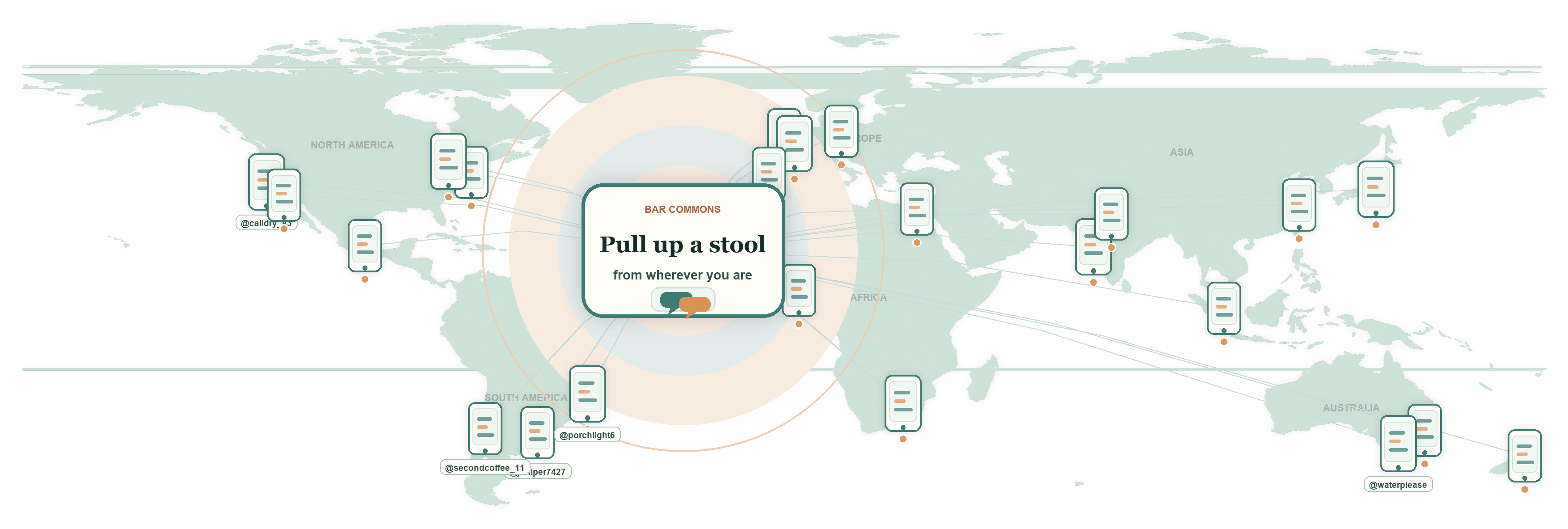
A seat is saved
Shared Corners is for the quiet kitchen, the late-night phone, the stressful ride home, or the moment you want company before the old plan takes over. Come in with a handle, find the corner that fits the night, and chat with peers choosing the same next step.
Save your place
Start with the moment that feels most familiar. Your answer helps make sure the first corners open around the nights people really need.
Raise your hand without having to explain your whole story.
Tell us whether cravings, social pressure, work stress, or starting over is the real door in.
Your answer helps the first corners match the nights people are actually facing.
Built for trust
Structured recovery programs can be valuable, and many people find real help there. Shared Corners is simply a different first step: independent conversation that meets you where you are, with people sharing lived experience, hard moments, falters, and the practical choices that helped them not drink in the next moment.
Choose what you share, and keep your real-world identity out of the room.
The core interaction is reciprocal: draw on what others have lived, share what helped you get through, and save a seat for someone facing a familiar moment.
The future app should let members open a private corner for a specific moment, invite trusted people, or leave the room open for others who understand that same situation.
No points, shame, or perfect streak required. Shared Corners exists for the conversation you need before the next drink becomes the plan.
We know the Shared Corners name and bar-adjacent signs can carry weight when you are trying not to drink. This is not meant to make light of it. The corners keep the familiar seat, the side conversation, and the feeling that someone is already there, without making alcohol the point.
If community conversation is not enough, trusted crisis, treatment, meeting, and education links stay close.
Resource shelf
Sometimes a conversation helps you get through the next ten minutes. Sometimes the night needs more support than another person in the corner can offer. Shared Corners keeps trusted help close, while staying clear about what it is: an unaffiliated peer conversation community, not a forced program, treatment provider, or substitute for professional help.
Evidence-informed treatment
Change tools
Treatment locator
Self-check tool
Find your corner
Whether you searched for cravings, pressure, or another plan, each door should lead to a corner that feels specific to tonight.
Shared Corners is for peer conversation and shared lived experience. It is not a sobriety tracker, forced program, treatment provider, medical care, therapy, detox support, legal advice, or emergency care. Structured programs and professional support can help many people; this preview is focused on anonymous peer conversation before the next choice. The bar-adjacent language is used to make the first step feel more familiar and welcoming, never to make light of choosing not to drink.